

Democracy Should Not Require Advanced Placement English
One of the clearest examples of political elitism is when local party spaces or civic bodies require formal presentations, polished procedure, or insider fluency before an idea can even be heard
You’ve probably seen it.
A resident raises a concern and gets told to submit it in the right format.
Bring a deck.
Follow Robert’s Rules.
Condense to three minutes.
Use the approved channel.
Wait for committee review.
Email the chair.
Come back next month.
By the time the process is explained, the people most affected are already exhausted.
If your idea only counts after it’s translated into bureaucratic theater, then you are not listening for truth. You are filtering for class signals.
We need to be blunt about literacy and access in this country. Tens of millions of adults read at low levels. Many others are fluent thinkers who struggle with forms, jargon, legalese, public speaking, disability barriers, second-language hurdles, trauma responses, or simple lack of time.
That does not mean they lack intelligence.
It means systems were not built for them.
And yet their rent still rises.
Their water still gets shut off.
Their kid’s school still gets underfunded.
Their wages still get stolen.
Their rights still get voted on.
So why should their voice require a polished memo?
Questions Pre-Approved, People Disapproved
Town halls with screened questions are another perfect symbol.
Officials say they want to hear from the public, but only after staff removes unpredictability, urgency, anger, embarrassment, and truth sharp enough to matter.
What remains is performance.
Too many public meetings are designed to simulate listening while avoiding accountability.
Real democracy is messy.
People stumble over words.
They ramble.
They cry.
They get mad.
They speak from experience instead of policy white papers.
Good. That is public life.
Systems That Sort Human Worth
County codes that take a degree to navigate.
Benefits systems full of traps and deadlines.
Courts where wardrobe affects credibility.
Schools where confidence gets mistaken for competence.
Hiring systems that reward polish over skill.
Institutions that hear certain accents as ignorance and certain accents as authority.
Then add race.
Religion.
Disability.
Gender expression.
Immigration status.
Neighborhood.
Criminal record.
Credit score.
All of it becomes a sorting machine.
A flow chart deciding who gets patience, who gets suspicion, who gets help, who gets punishment, who gets believed, who gets ignored.
We built too many systems that ask “Are you worthy enough to be heard?” instead of “What do you need?”
That’s why people call these spaces elitist.
Not because expertise is bad.
Not because structure is evil.
Not because learning doesn’t matter.
Because too often expertise is used as a moat. Structure is used as a wall. Process is used as a weapon.
Intelligence Is Bigger Than Institutional Fluency
Some people can navigate a county ordinance but can’t change a tire, calm a frightened child, stretch groceries through the month, organize neighbors, read a room, spot corruption, survive hardship, or know when someone is lying.
Some people speak rough, write imperfectly, and still understand exactly what a community needs.
We confuse polish with wisdom all the time.
If You Need a Credential to Be Heard, It Isn’t Democracy
Public systems should be understandable to the public.
Meetings should welcome plain speech.
Forms should use human language.
Questions should be live and unscripted.
Ideas should stand on merit, not formatting.
Courts should judge facts, not outfits.
Officials should respect people who are nervous, angry, unpolished, grieving, or scared.
The test of democracy is not how it treats the fluent. It is how it treats the overwhelmed.
If people must become miniature lawyers, consultants, or academics just to participate, then participation has already failed.
The janitor matters.
The cashier matters.
The addict in recovery matters.
The immigrant elder matters.
The person who reads slowly matters.
The person with an accent matters.
The person who has never felt welcome in a government building matters.
Our voices are not extra credit.
We are the whole point. Take it from me, I’m a high school drop out, after all.
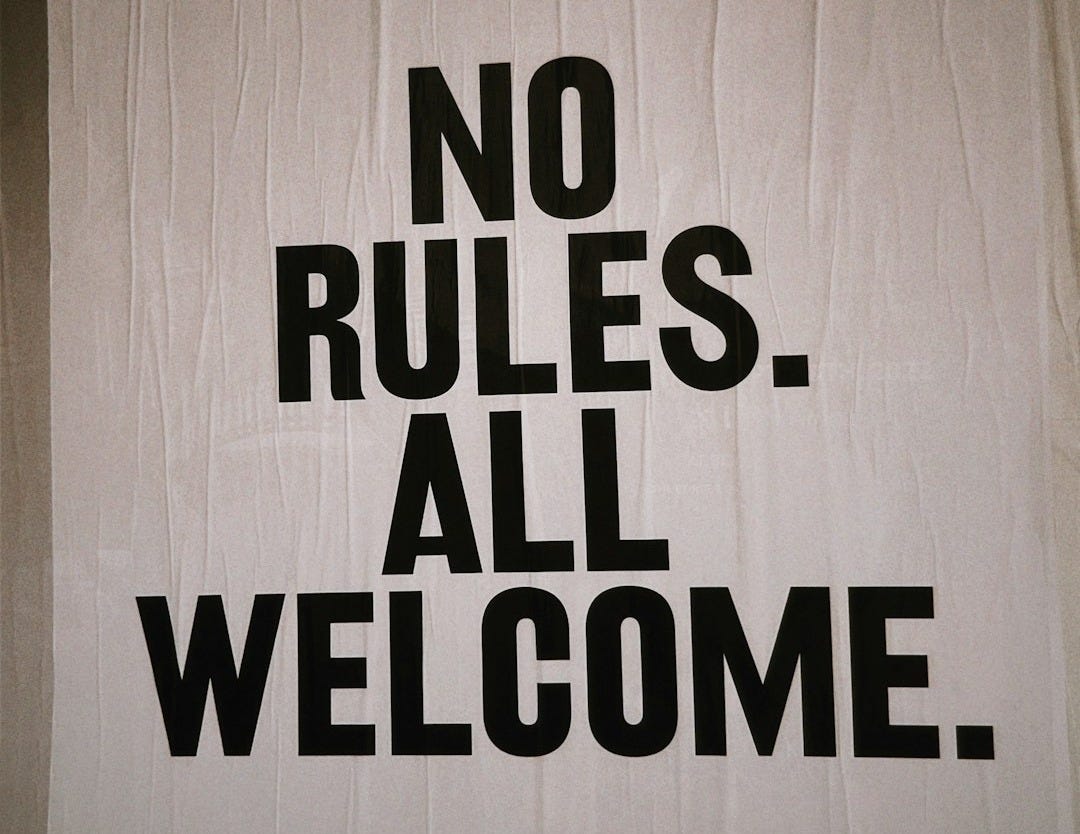
100% true. The more active I've become in advocacy, the more I see how gatekeeping of all kinds keeps regular people from participating in our "democracy". Those with money and the right relationships get access and power. The rest of us get to volunteer our time and labor.